Building Agility and Court Movement
Developing efficient footwork, rapid directional changes, and explosive court positioning represents a fundamental aspect of competitive racquet sports performance. This comprehensive guide explores training methodologies, movement principles, and practical approaches to enhance speed and agility on the court.
Foundation of Court Movement
Effective court movement in racquet sports depends upon understanding the biomechanical principles that govern acceleration, deceleration, and lateral displacement. The foundation of improved agility begins with proper stance mechanics, which establish the platform from which all movements originate.
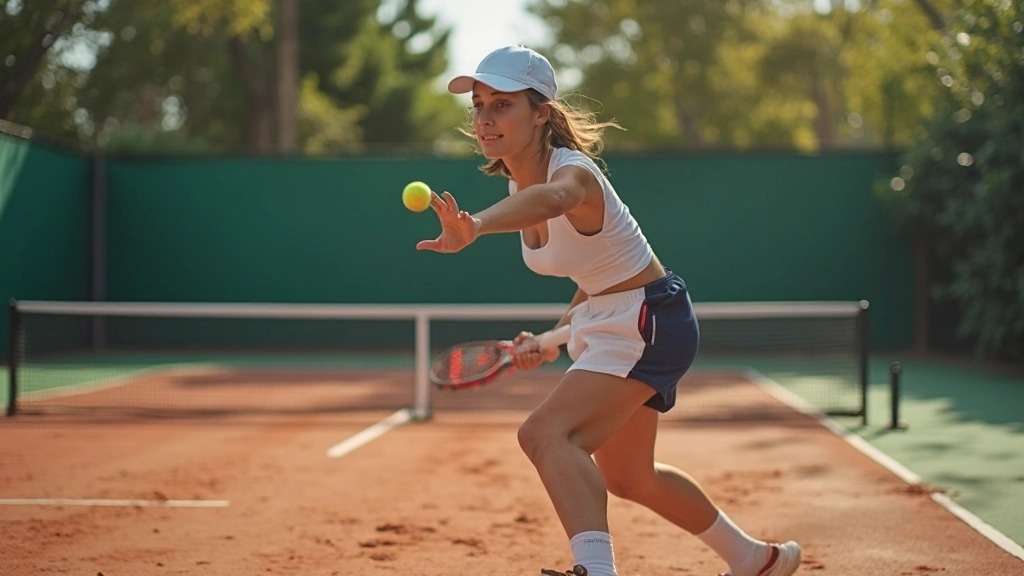
A balanced ready position—with feet shoulder-width apart, knees slightly flexed, and weight distributed forward on the balls of the feet—allows athletes to respond quickly in any direction. This position minimizes the time required to initiate movement and enables smooth transitions between different directional changes.
The concept of "split-step" timing plays a critical role in court movement optimization. By executing a small hop precisely when the opponent makes contact with the ball, athletes can reset their weight distribution and prepare their lower body for explosive movement toward the incoming shot. This technique significantly improves reaction time and movement efficiency.
Key Movement Elements
Lateral Movement
Lateral displacement across the court requires controlled cross-stepping patterns that maintain balance while maximizing speed. Proper technique involves keeping the shoulders parallel to the net while executing side-to-side movements, preventing unnecessary rotation that could compromise stability.
Forward-Backward Movement
Moving efficiently toward the net requires different mechanics than retreating to the baseline. Forward movement emphasizes small, quick steps to maintain control and reaction capability, while backward movement relies on maintaining visual contact with the opponent while adjusting court positioning.
Directional Changes
The ability to change direction rapidly involves eccentric muscle contraction to decelerate, followed by immediate acceleration in the new direction. This requires significant lower body strength and neuromuscular coordination, emphasizing the importance of sport-specific strength training alongside movement drills.
Footwork Patterns
Specific footwork sequences—such as the split-step, recovery step, and adjustment steps—form the foundation of efficient court coverage. Mastering these patterns through repetitive practice develops muscle memory that enables automatic responses during competitive match situations.
Balance and Control
Maintaining balance throughout movement sequences allows athletes to execute technical strokes from any court position. This involves core stability, proprioceptive awareness, and controlled deceleration that prevents overcommitment to any single direction.
Timing and Rhythm
Developing appropriate movement timing relative to the opponent's shot selection and ball flight represents an advanced aspect of court positioning. This involves anticipation skills that develop through exposure to varied shot patterns and competitive match experience.
Training Approaches for Improved Agility
Developing enhanced agility and court movement requires systematic training that addresses footwork mechanics, directional control, and sport-specific conditioning. The following approaches represent evidence-based methodologies utilized by coaching professionals:
-
1
Ladder Drills and Cone Work
Agility ladder exercises develop rapid foot placement and neuromuscular coordination essential for efficient court movement. Cone-based directional drills enhance the ability to execute explosive movements from static positions, simulating the acceleration patterns required during match play. These exercises improve foot speed while reinforcing proper movement mechanics.
-
2
Court-Specific Movement Patterns
Practicing footwork patterns directly on the playing court, executed at progressive intensities, develops sport-specific movement efficiency. Drills that emphasize court positioning relative to the net, baseline, and sidelines reinforce the spatial awareness necessary for optimal positioning during competitive play.
-
3
Lower Body Strength Development
Targeted strength training addressing the quadriceps, hamstrings, glutes, and calf muscles enhances the force production necessary for rapid acceleration and deceleration. Single-leg exercises, lateral movements, and plyometric training develop the muscular strength underlying efficient court movement.
-
4
Reactive Agility Training
Drills incorporating random directional stimuli—such as coach-directed movements, ball placement, or visual cues—develop the decision-making and anticipatory skills necessary for game situations. These exercises progress from predictable patterns to unpredictable scenarios that approximate match conditions.
-
5
Cardiovascular Conditioning
Sport-specific conditioning that emphasizes interval training and high-intensity effort periods maintains movement quality throughout extended rallies and multiple matches. Conditioning programs should replicate the intensity patterns and movement demands characteristic of competitive play.
Educational Information
This content provides educational information about movement principles and training approaches in racquet sports. The information presented represents general guidance and does not constitute personalized coaching advice or training prescription for individual athletes.
Training programs should be developed in consultation with qualified coaching professionals who can assess individual abilities, movement patterns, and specific development needs. Physical conditioning and athletic training carry inherent risks that vary by individual; athletes should proceed with appropriate caution and professional guidance. Individual responses to training approaches vary considerably based on existing fitness levels, technical proficiency, and previous athletic experience.
Related Training Articles