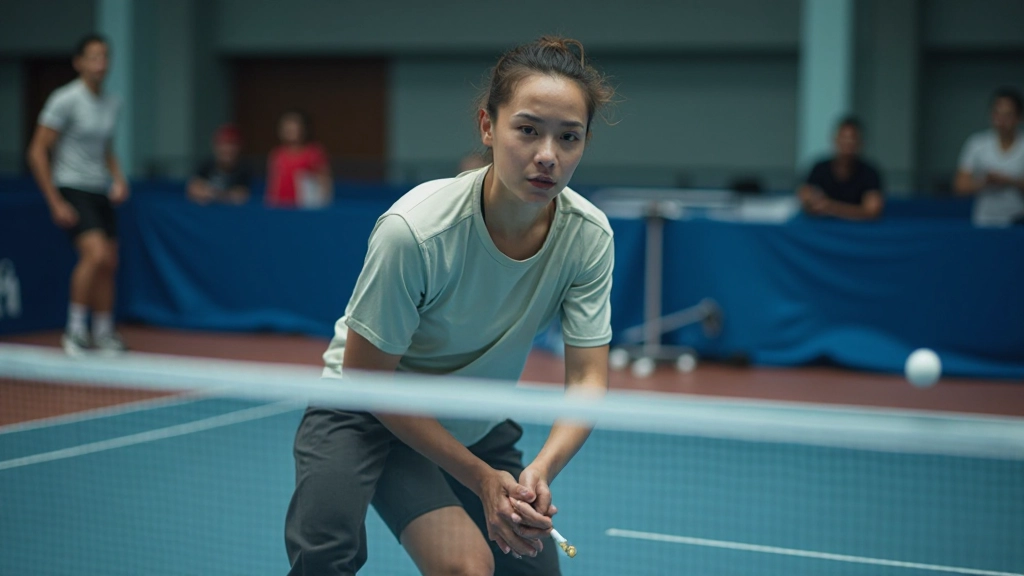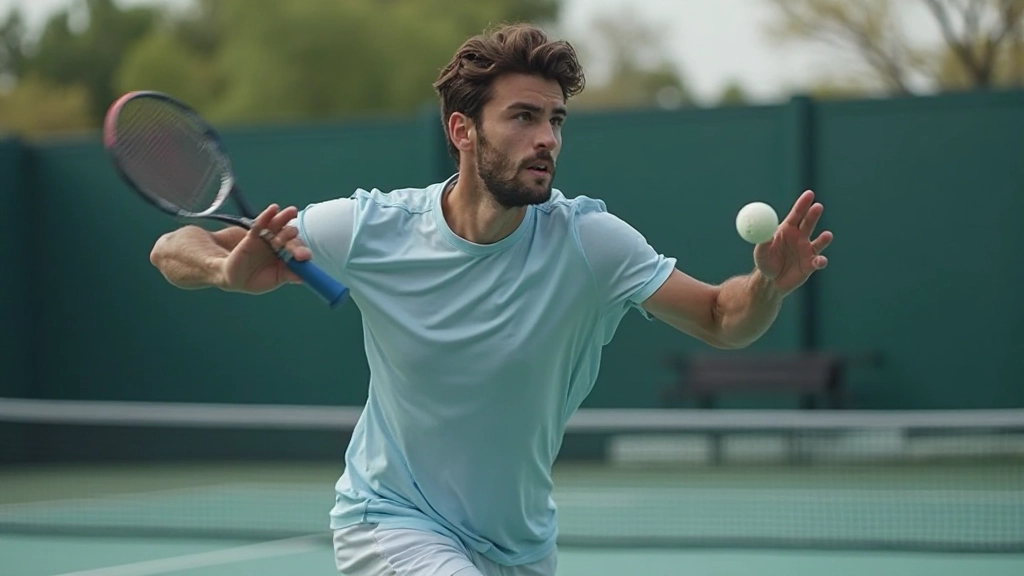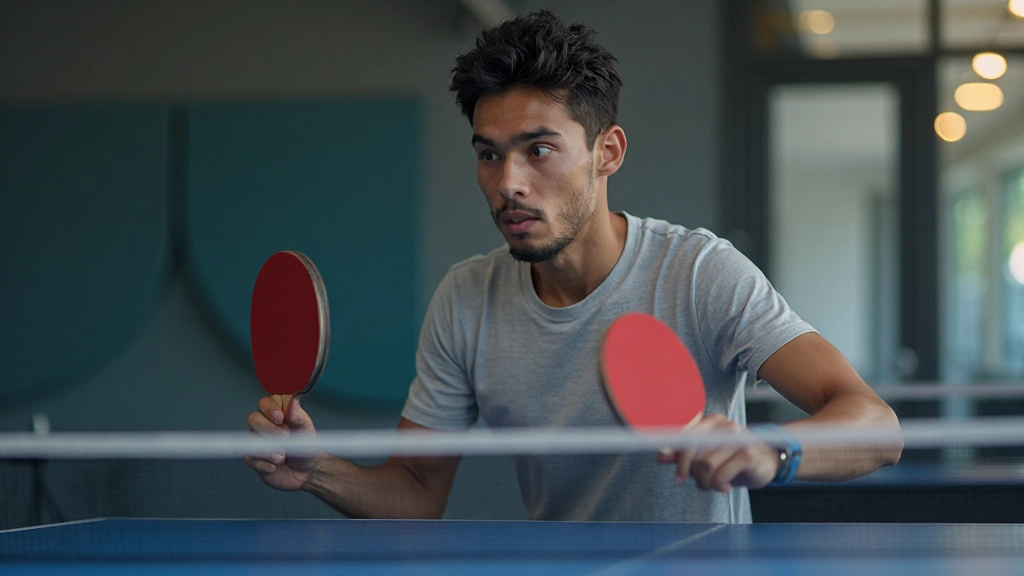
Mastering Table Tennis Fundamentals
Learn essential table tennis techniques including grip, stance, and basic stroke mechanics for developing solid foundational skills.
Read ArticleEssential conditioning protocols and injury prevention strategies for maintaining athletic health in racquet sports training. Learn how to build resilience, develop functional strength, and establish recovery practices that support sustained athletic performance and injury mitigation.
Athletic injury prevention in racquet sports encompasses a comprehensive approach to maintaining musculoskeletal health and functional capacity. The demands of table tennis, badminton, and tennis require rapid directional changes, explosive movements, and sustained court positioning. These movement patterns place specific stress on the shoulder complex, knee joints, ankle stability, and lower back region.
A well-structured injury prevention program addresses the biomechanical demands unique to racquet sports. This includes developing eccentric strength in decelerator muscles, improving proprioceptive awareness, and establishing neuromuscular control patterns. Athletes who implement preventive conditioning strategies demonstrate improved movement efficiency and reduced injury occurrence rates throughout their training and competitive seasons.
The integration of conditioning principles with injury prevention creates a synergistic approach where athletes simultaneously build performance capacity while reducing injury risk. This dual-focus methodology ensures that training progression enhances both athletic capabilities and structural resilience.

Effective injury prevention requires implementation of evidence-based strategies that address movement quality, tissue resilience, and recovery capacity. The following approaches represent foundational elements of comprehensive injury prevention programming.
Establishing proper movement mechanics through deliberate practice and corrective exercises. Focus on kinetic chain alignment, joint stability, and coordinated muscle activation patterns.
Building capacity in decelerator muscles through controlled lengthening contractions. Eccentric training improves tissue resilience and reduces injury risk during rapid directional changes.
Enhancing sensory awareness and neuromuscular control through balance work, unstable surface training, and reactive movement exercises. Proprioceptive competence reduces injury susceptibility.
Developing active range of motion and movement quality through dynamic stretching, mobility drills, and sport-specific warm-up protocols that prepare tissues for activity.
This content provides educational information about injury prevention and conditioning strategies in racquet sports. It is presented for informational purposes and does not constitute professional medical, training, or rehabilitation advice.
Individual circumstances vary significantly based on personal health status, training history, existing injuries, and physical capabilities. Before implementing any conditioning program or modifying training protocols, consultation with qualified healthcare professionals, certified athletic trainers, or sports medicine specialists is advisable to ensure approaches align with individual needs and circumstances.
Structured conditioning programs provide systematic development of athletic capacities while incorporating injury prevention principles. These protocols address multiple physical qualities essential for racquet sports performance.
Establish baseline strength in major movement patterns including lower body (squats, lunges, deadlifts), upper body (pushing and pulling patterns), and core stability work. This foundation supports more advanced training and reduces injury risk.
Develop movement patterns specific to racquet sport demands including lateral shuffling, explosive directional changes, rotational movements, and rapid acceleration-deceleration sequences with proper biomechanical alignment.
Target specific joint complexes vulnerable in racquet sports: ankle stability work, knee proprioception development, hip mobility and strength, shoulder stability exercises, and spinal stabilization protocols.
Build aerobic and anaerobic capacity through structured conditioning that matches the intermittent, high-intensity nature of competitive racquet sports while managing fatigue-related injury risk.
Injury prevention extends beyond training to encompass comprehensive recovery and maintenance strategies. Athletic recovery represents a critical component of injury mitigation, allowing tissues to adapt to training stimulus and maintaining structural integrity.
Sleep Quality: Prioritize 7-9 hours of consistent sleep nightly. Sleep facilitates tissue repair, neural recovery, and hormonal balance essential for injury prevention and athletic adaptation.
Hydration Protocols: Maintain consistent hydration throughout training and competition. Dehydration impairs tissue elasticity and increases injury susceptibility during high-intensity activity.
Nutritional Support: Consume adequate protein, carbohydrates, and micronutrients to support tissue repair and inflammatory regulation. Nutrition substantially influences recovery capacity.
Active Recovery: Implement light movement, mobility work, and gentle stretching on rest days. Active recovery enhances circulation, reduces stiffness, and maintains movement quality.
Temperature Modalities: Apply cold therapy to acute inflammation and heat therapy for chronic tightness. Temperature modalities support tissue recovery when applied appropriately.
Regular Assessment: Conduct periodic evaluations of movement quality, strength balance, and tissue function. Early identification of asymmetries or dysfunction enables preventive intervention.

Effective injury prevention and conditioning represent investments in long-term athletic sustainability. By integrating movement quality development, strength building, proprioceptive enhancement, and comprehensive recovery strategies, athletes establish robust foundations for sustained participation in racquet sports.
The approaches outlined in this content provide a framework for understanding injury prevention principles. Successful implementation requires individualization based on personal assessment, training history, and specific sport demands. Professional guidance from qualified practitioners ensures that conditioning programs address individual needs while progressing systematically toward enhanced performance and injury resilience.